Chapter 43 : that time he got framed for murder
And other small adventures

Chapter 42 Continued
As the doctor spoke, he raised his hand to study his neatly trimmed nails. Nathan took the opportunity to flex the muscles in his legs.
Wollstonecraft droned on, “—Just as every form of humanity previously has been sacrificed for us to reach where we are now. We are made to be sacrificed to the next form. The worship of weakness, the religious illusions that teach us to see divinity in each imperfect iteration.” Victor laughed, “If there is a divinity, it does not touch us all.” He looked at Nathan and smiled weakly, a hand smoothing the cloth of his trousers over his knee. “There are some revelations that are too important to return to darkness. This is one truth that must be drawn into the shocking light of truth: not all life deserves to be iterated.”
Realizing Victor was possibly coming to the end of his speech, Nathan decided to act. In one concerted effort, he curled his toes against the floor, and pulled his weight just enough to make his body slip into a deeper slouch in the chair, making it look like he was losing his precarious, still paralyzed, balance. The doctor stopped speaking and focused on Nathan. Nathan forced his eyes to remain dim, as if the drug were preventing him from reacting to his change in position, or even noticing he’d moved. It was hard not to control his weight, but in reality, his core muscles were only just starting to regain consciousness. As he returned the doctor’s stare, he let his body continue its slide from the white leather chair.
Nathan remembered playing ragdoll with his sister as a child. He’d lie on the couch and she’d pick up one of his arms, letting it drop over him. If he resisted the movement to prevent his hand from slapping his face or hitting the ground with its full weight, she’d declare him the loser and it would be her turn to impersonate an inanimate, floppy doll. Now, having begun the slide, it took every bit of willpower for Nathan to allow his head to bang the chair’s arm as he slid to the floor, letting his arms land where they would, and his knees to jam against the glass wall of the designer desk. Though, even if he had tried to actively avoid any of these casualties, he was not fully fit yet and it would have been a half-powered attempt.
On the floor now, he saw the doctor’s shiny black shoes, the fine wool trousers tenting out at the hem, and silky black socks covering slim ankles. He lay still, his back cramped in an unnatural s-curve, a new bruise throbbing on his temple.
Nathan knew his sister would have been proud of his performance.
“I—“ he said stiffly, only half-acting, as he genuinely did feel paralyzed and cramped. “I am stuck—” He didn’t twitch a muscle.
Chapter 43
In his peripheral vision, Nathan saw the doctor look down at him, and if he wasn’t mistaken, roll his eyes. But the man didn’t immediately move. Perhaps it was only a moment’s hesitation, but it felt like the doctor deliberated for a half hour before deciding that yes, that sorry excuse for a human must be retrieved from the floor. Nathan saw him slowly uncross his legs and unfold his arms. The doctor put both shoes squarely on the floor then, like an exasperated sloth, used the arms of the chair to push up to a standing position. Dr. Wollstonecraft did not seem pleased with the situation in front of him. But instead of coming directly to Nathan’s side of the table, he picked up the hypodermic needle lying diagonally across his desk and took a step to the right. He held the barrel up to the light, studying the remaining dosage. Something about the way he positioned himself told Nathan he had deliberately moved directly into Nathan’s line of sight. He wanted Nathan to see what he had prepared. To Nathan’s annoyance, he was preparing for the administration of his second injection of whatever numbing agent he’d used.
“One must be careful with this sort of thing,” the doctor said to the syringe, depressing the stopper just enough for a single bead of clear fluid to form on the tip of the needle. Nathan saw, in hyper-acute focus, the light shining through the liquid, like a mirror flashing sunlight into his eyes. Why did the doctor keep his office so bright? It was too late in the evening for this focused lighting, strong enough for an operating room.
Finally, Dr. Wollstonecraft lowered the syringe and, to Nathan’s relief, set it back on the table, the glass barrel clinking like an IED explosion in Nathan’s ear as glass landed on glass. Nathan almost flinched. The doctor made a show of how much time and control he had as he walked around the desk toward his captive. He would not be rushed or manipulated. He paused again, deciding how best to proceed.
This is it, Nathan thought. He’d already decided, before pulling himself to the floor, on the move he would try to execute, but it would depend on how the doctor approached him.
For the first time that night, things seemed to go the way Nathan had planned. The doctor pushed the chair back and straightened Nathan’s legs by pulling his feet out to the side of the desk, unfurling the sloppy snakepile of a man, then, moving behind him, the doctor hooked his arms under Nathan’s armpits and hoisted him up.
Nathan had no way to know how much core strength he would need to call on. When the doctor had gotten him three-quarters up and was bending as far back as Nathan thought he could go, Nathan mustered every ounce of energy, force, rage, and disgust that he could drag from his awakening body and swung his right arm around and over his left shoulder, fingers curved to catch eyes, skin, tissue—intent on doing as much damage as possible in a single move. He was still half-paralyzed, his arms and legs tingling, but the desperation of survival connected his arm like a magnet to the face behind him.
With an animalistic shriek the doctor fell back, one hand immediately at his face, the other reaching out behind to catch his fall. Nathan drove his feet into the ground, as much as he could drive anything, and dropped backward onto him, but the doctor was quick to roll out and regain his bearings, having the advantage of his full capacity. One hand still covered the eye Nathan’s fingertips had connected with, but the doctor was already lunging up, and before he could be stopped, had collected the syringe from the table. Before Nathan could roll out of reach, the doctor had collapsed on top of him. With a second pinch, Nathan’s world went dark once again.
When Nathan woke, for the second time,, he found his wrists tied to the arms of the chair with gauzy white bandages. An intake of breath told him he was strapped under the armpits to the back of the chair with a loop of something softer and broader than rope. His body sagged slightly forward. He’d played a card and lost. His head felt more groggy than before, like he couldn’t fully free himself from the molasses of the underworld of unconsciousness.
“I’m not sure if you instigated the fall,” the doctor said slowly, again in the visitor chair across from Nathan, just as before but for a slightly puffy eye over a pinkened cheek. “But we cannot take such chances. The night is not so long, and we have much to do.
“You won’t…get away…with this,” Nathan struggled to whisper. This time, the dosage must have been higher, or had built upon the first. He wouldn’t bother playing the invalid now. That had been tried and had failed. The doctor was smarter than to let himself be played twice.
“You read too many comic books,” the doctor replied. “The super hero swooping in and saving the day. The cops throwing the bad guys in custody and the good guys high-fiving each other on their top-notch detective work.” He smirked at Nathan, “That’s not how the real world works.”
“No one… gets… away—,” Nathan whispered foggily, “—with anything.”
“You believe in Hell, then? Because bad people get away with things all the time. It’s quite naive to believe the world is just. You Americans are so old school. It would be almost charming if it weren’t so embarrassingly backwater.”
“I do,” Nathan said. “I’ve seen it.” It felt like he wasn’t getting enough oxygen. Speaking was making him winded.
The doctor’s mouth smiled, but his eyes remained dim. “Yes. I suppose I believe in it too. Although belief in things you have witnessed doesn’t really require much belief, does it? Only a fool and a schizophrenic don’t believe their own experiences. I don’t suppose you or I are either of those.” The doctor leaned forward, “But enough philosophy. Your little shenanigan reminded me of what else I must get done tonight. And it is necessary to prepare while you’re still paralyzed. We must be elsewhere when you’ve worked off the paralysis.”
Nathan’s heart was racing, despite the drug’s numbing work. He forced his focus to remain in the office and to let his thoughts wander off to what might be coming in the next few hours. He tried to imagine a solution to fighting off the doctor’s plans, but he came up blank. What could he possibly do until the drugs had worn off? All he had were his words. Hazy, whispered words at that.
Bide your time, he thought. Don’t freak out. There was a solution to everything.
“Are you a night owl?” The doctor asked as he pulled a long strip of cloth out of a box that hadn’t been there before his forced nap. “I do my best work at night. All my inspiration, my problem solving, my breakthroughs. They always come at night. My muse is a whore afraid of polite society.” The doctor chuckled at his metaphor as he arranged the long strip of cloth in his lap, wrapping it around both fists and pulling tight, testing its tensile strength. “She only dares to visit me when respectable people have gone to bed. But I don’t complain, she serves me well.” As he spoke he pulled the material tighter in his hands. “Always delivers. That’s what non-creative people don’t understand. You can’t wait for the muse to visit you. You must bind her to you, force her to obey you. Demand her presence. You must conquer her and own her until she’s broken to your will.” The doctor continued wrapping his fists in the cloth as he spoke, winding them tighter and tighter with the gauzy material.
“I never thought of…medicine… as… a creative endeavor,” Nathan whispered. The more he talks, the more time passes, the more the drug will weaken, Nathan thought. He had not counted on the second dose. Where he had once felt hopeful that he would surely find a way out of this disaster, his mind was cloudy and his faith in his ability to innovate a solution was evaporating like so much alcohol burning away on a posh dessert.
“Entry level work in any field isn’t creative. Top level work is, in nearly every field. That's why the top is lucrative and lonely. That’s where the work is done which only special people can do. Not everyone is creative. Not everyone is smart enough to solve those problems.”
“You… are—” Nathan answered. He didn’t want generalities.
Wollstonecraft smiled, his head nodding almost imperceptibly. “We have work to do,” he said, as if he recognized Nathan’s attempt to trick him into monologuing his own glory. He unwound his fists from the material and without further explanation, stood and walked over to his captive.
Nathan tried to lift a hand, twitch a toe, even wrinkle his mouth into a scowl. Nothing moved. Not even his breathing seemed to be under his control.
“This probably won’t be very comfortable for you,” the doctor said. He bent over, studying Nathan close in the face, as if he could gauge the status of the drug in the younger man’s bloodstream by the size of his pupils. Nathan couldn’t help noticing that the doctor, even in such close proximity, smelled of nothing. His breath was warm on Nathan’s face, but it smelled of absolutely nothing. Not coffee, not toothpaste, not even the musty breath of a long day.
Wollstonecrafrt straightened up. “While uncomfortable for you, it is definitely worse for me.” He raised an eyebrow and leaned back, half-sitting against the edge of his desk. “But don’t worry. I am in complete control of everything.”
To Nathan's surprise, the doctor untied both his hands from the chair arms, then he knelt down between Nathan’s legs. His sense of helplessness awoke an old demon within him. His mind raced and stood still, full of ideas and empty, while his heart tried to race with the irregularity of his emotions.
The doctor unbuttoned the top two buttons of his own collared shirt. Then he lifted one of Nathan’s lifeless hands, and brought it to his own neck.
“This may seem an odd thing to do—” the doctor said, as if he felt Nathan deserved an explanation. “—But I’m sure you can figure out why it’s necessary.” The doctor clamped his free hand on top of Nathan’s and dug the short nails of Nathan's limp fingers into his flesh. While maintaining the pressure between fingernails and flesh with the first hand, he drug Nathan’s arm downward, across his neck.
Nathan felt nothing and everything.
Wollstonecraft repeated the scraping again, then allowed Nathan’s limp hand to fall into his lap. He repeated the motions again, with Nathan’s other hand, pressing the tips of Nathan’s fingers into his neck, dragging them along the skin, over and down past his collarbone. When he’d finished using Nathan’s hands as rakes, he let the second hand drop next to the first. Nathan had no sensation in his fingers, and experienced it only through what he saw. He wanted to vomit at the thought of the doctor's oily skin, thick under his fingernails.
The doctor leaned back on the heels of his loafers and pulled the strip of cloth off the table behind him where he’d set it.
“This part is more difficult,” he said. “But I’m sure we can figure it out.” He spoke in the methodical tone Nathan’s mother used when she was making some complicated dessert—a meringue that might not set or a soufflé that could potentially collapse. “We’ll figure it out,” she would say, as if Nathan had a significant role to fill as her assistant. Now Nathan told the doctor exactly the opposite of what he would say to his mother.
“It won’t work,” Nathan whispered. “There’s… no way… you… can make it look… right.”
The doctor laughed an empty laugh, his mouth smiling the empty smile of someone whose mother had never made soufflé or meringue with him. “It won’t be perfect. It’s true. But we’ll get by.” The doctor leaned forward again. It was absurdly intimate, Nathan’s knees pressing against the man’s chest, his hair close enough to smell—if it had had any smell—as the doctor took both of Nathan’s hands and placed them on his neck, like a lover moving their partner into a favorite position. Except he wasn’t a lover. He was forcing himself on Nathan—raping him. The doctor was taking control of his body and using it, nonconsensually, for his own terrible desires.
Wollstonecraft took the strip of cloth and held it in his teeth, then picked up Nathan’s limp hand once more and returned it to his neck. He leaned in closer to Nathan to minimize the gravitational pull of Nathan’s arm while he arranged his scene. For the first time that night, Nathan was grateful to have no tactile sensation. Having to embrace the doctor’s neck, even with the help of the white bandages, was more than he would be able to stomach if he actually had to feel the skin under his hands.
The doctor’s dark hair brushed against Nathan’s chin, but the man seemed unaware of the intimacy. Still holding one end of the cloth in his teeth, and tilting his neck to pinch Nathan’s second hand against his shoulder, he started wrapping Nathan’s hands with the material, locking them in place against his neck.
Nathan had never felt more violated.
“Are you ready?” The doctor asked, smiling up at his captive attacker. “If I could think of a way to prevent damage, I’d put a pressure piece between your hands and the tourniquet — something to focus the pressure of your fingers onto my neck. But I’m afraid that would bruise your hands as much as it does me. And how does one explain that away?” He made the sad smile of a clown that’s been fired from a birthday party. “This will have to do.” He shifted on his knees, then relinquished the bit of cloth from his teeth to one hand, the other end still held firm in his other hand, and looked Nathan straight in the eye.
Without breaking eye contact, the doctor pulled both ends of the cloth tight, his neck flinching at the pressure. Taking both ends in one hand, he blindly fell behind him to the desk, opened a drawer, and pulled out a fountain pen. Still keeping his eyes locked on Nathan, he looped both ends of the cloth around the pen and started twisting, the pen creating an anchoring tension that allowed him to tighten the cloth much more than a simple knot could accomplish.
Nathan felt nothing. He observed what happened as if from a spectator’s seat. His hands, grinding into the doctor’s neck. The knuckles of the doctor’s hands turning white. The smirk in the man’s eyes as the pressure tightened, the skin of his face turning pink, and then purple, as the blood flow slowed and became deoxygenated.
Nathan was horrified. If the doctor screwed this up, if he was too ambitious and too determined to provide proof Nathan had tried to strangle him, he might lose consciousness before he could loosen his own strangled chokehold. Only when the drugs wore off would Nathan be able to release the man from his own trap, at which point, if he had really had the guts to pull tight enough, he could be dead.
Nathan had never killed a person. Never thought he would be a person to kill a person. What would he be if he became a person who killed a person while that person was killing himself? What a schoolyard tongue-twister.
The horror at what his hands were doing must have come through his eyes. The doctor had locked onto Nathan’s gaze as he pulled the material tighter, as he turned the American into a candidate for murderer.
As Nathan's fingers fused into the tissue of Wollstonecraft’s neck, Nathan witnessed an almost supernatural transformation. From their very first meeting, Nathan had noticed how unnaturally handsome he was. It seemed almost synthetic. People weren’t so symmetrical. So free of wrinkle, or freckle, or sunspot. The doctor’s face was perfectly balanced, with a perfectly square bone structure, holding perfectly mirrored eyes in studied precision. His hairline was thick and well defined. His eyebrows perfectly shaped the dark line of his eyes. His teeth and mouth were aligned and precise.
And yet, as Nathan watched him strangle himself, the absurdity of what he was doing—staging his own death, forcing someone into pretend-killing him, Nathan felt as though a spirit in the doctor’s face awoke. As if the approach of death released a deamon in the man that darkened him. If Nathan thought it were physically possible, he would have said his face transformed. It was now hideous in the most grotesque way. Small red dots started to appear around his eyes, and his lips bulged. His mouth began to grimace while the remnants of a grin remained. Nathan strained to look away, to move his head, to distance himself from what he was doing. He recalled stories of rape victims disassociating from their bodies when they were attacked—disappearing into a mind space far removed from what was occurring. Nathan wanted out. Wanted away. But the doctor seemed to not only control his body, but his eyes. His gaze. Nathan couldn’t pull away. Couldn’t move. Couldn’t even avert his attention.
And then it stopped. Just as the joy started to seep from the doctor’s face as the asphyxiation became more real, the man released the tourniquet and grabbed immediately at the cloth around his throat. In half a moment, Nathan’s hands were released, dropping lifelessly in his lap again. The doctor fell forward on his knees from his haunches, in yet another abnormally intimate position, coughing as his back curved and he choked on air, hands massaging his throat and airing the collar of his shirt.
“You tricky bastard,” he said to Nathan, “you won’t get away with strangling me. You should know that.”
“No one will believe you.”
“Everyone will believe me. Not least because you won’t be there to contradict them. It’s not just the police who love a case that closes with all its ends tied up. The public will laud me as a hero, facing the daemon of Geneva and fighting him down. Even if I did have to kill you, no one will blame me. I have the marks to show how serious the stakes were—my life was in danger! My skin is under your fingernails. Your handprints unmistakably match the bruises on my neck. Just as they would match the stranglehold bruises on Lize’s if she weren’t already buried. And doubtless William as well.”
“They won’t match Walton.”
“He’s a drug-addicted street urchin. No one is studying his autopsy closely. There was a witness that saw him strangled. The details don’t matter.” The smirk came to his face again, “It counts against you as murder, of course. That’s what is important.”
The doctor was infuriatingly convincing. He was confident, like a carnie at a county fair. Oily and distrustful.
Wollstonecraft walked back to the box by the visitor's chair and dropped the cloth into it, then buttoned his collar and straightened his shirt under the blinding white lab coat.
Authors Note :
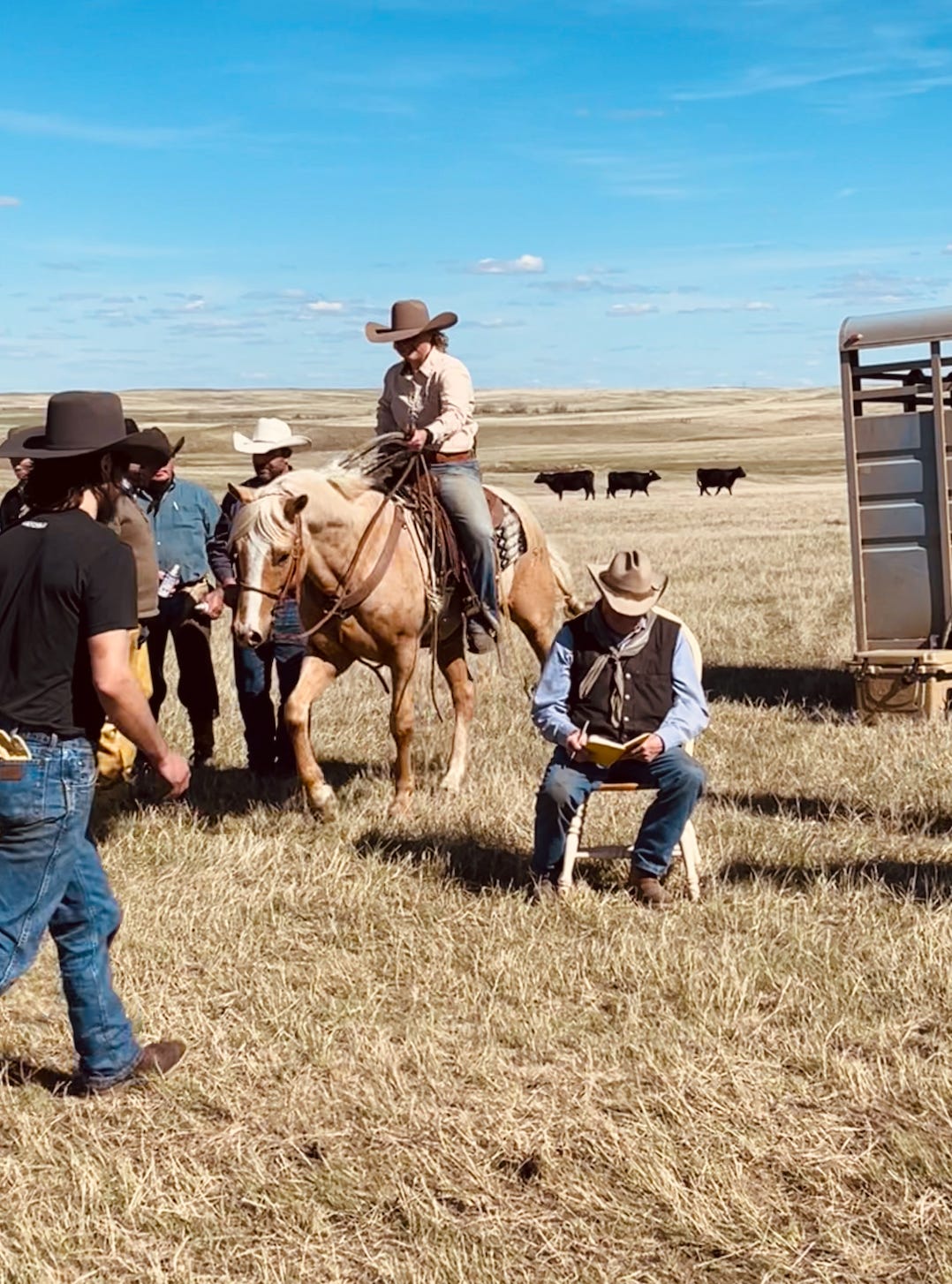
Most of you know I’m working on another book while I’m editing this story. This is Branding time, the most hands-on portion of a ranchers year — well, besides calving. Except Branding is a neighbor-thing, and calving is a month of 3-hr nights on your own.
My friend had me out to help with branding, which was amazing. I cooked all the food, which was a feet, prepping for forty hungry cowboys, and then the next day we did the actual branding.
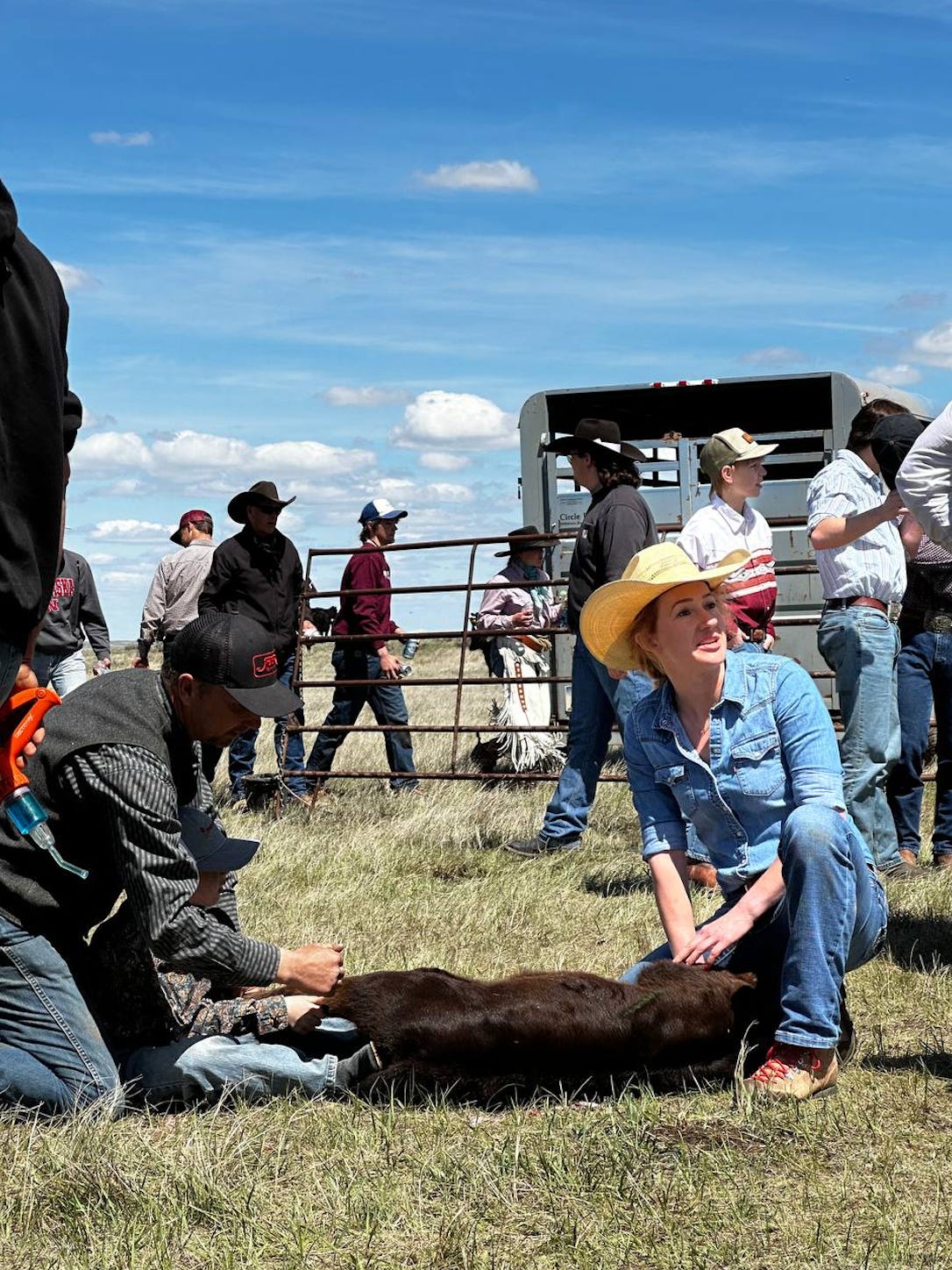
We were super lucky with the weather, and wrestled not quite 300 calves. I’ve been lucky to start making some pretty cool friends with the group of ranchers out in Montana.